Catholic church guide
Catholic church translation for Mass, readings, and the homily
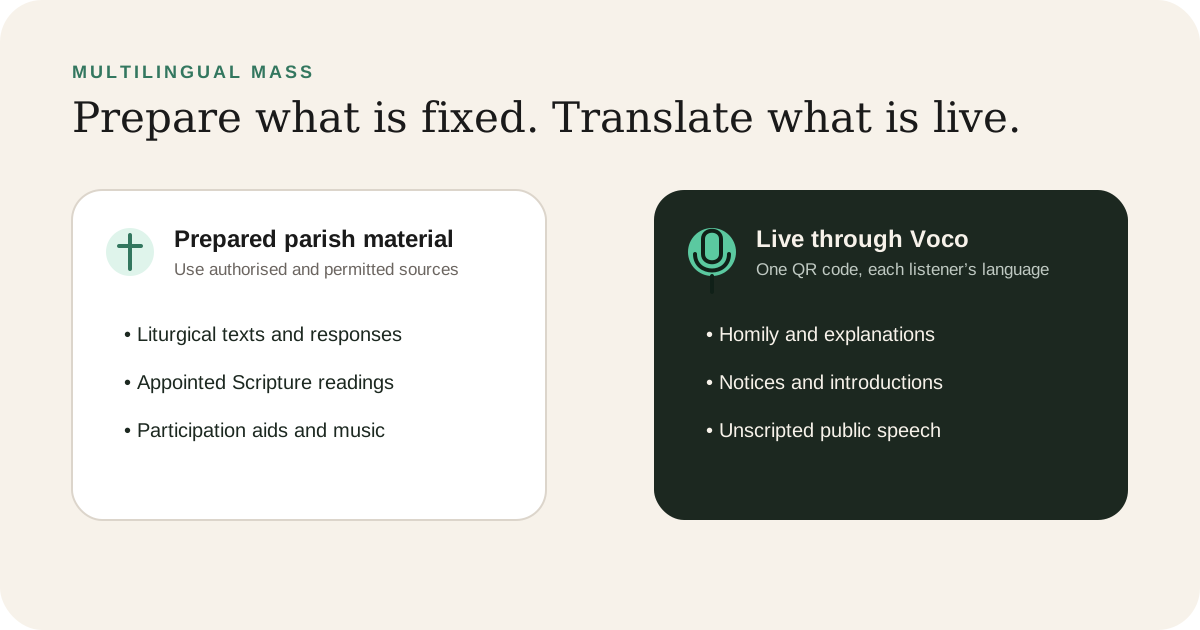
A Catholic parish does not need to machine-translate every word of Mass. Much of the liturgy and the appointed Scripture is known before Sunday; the homily, notices, and pastoral explanations are the genuinely live parts. A good multilingual plan respects that difference.

By Josh Stannard, Founder of Voco
Building practical live translation for churches. Updated August 2026.
Begin with the shape of Mass, not the software
The order of Mass gives a parish an advantage. The Introductory Rites, Liturgy of the Word, Liturgy of the Eucharist, and Concluding Rites are not an unpredictable stream of speech.
The parish can identify which words are fixed, which readings are appointed, and which moments will be spoken freely. That makes it possible to prepare accurate participation material without asking automatic translation to carry the whole celebration.
Start by marking the homily, announcements, introductions, and any unscripted intercessions as live moments. Treat the people’s responses, sacramental formulas, and other authorised texts as prepared material under the direction of the priest and diocesan guidance.
- Use approved liturgical editions for the territory and language concerned
- Prepare the day’s reading references and any permitted participation aid before Mass
- Use live translation chiefly for the homily, explanations, notices, and unscripted speech
- Ask a fluent Catholic reviewer to check theological vocabulary and register
Use the lectionary as preparation, not as a translation shortcut
The lectionary tells the parish which passages will be proclaimed, but it does not give permission to republish any translation at will. In the United States, for example, the USCCB specifies the English-language Lectionary used at Mass; other countries and languages have their own competent authorities and approved books.
Give volunteers the references early, then obtain the text from an edition the parish is authorised to use. Voco’s Scripture detection can help identify references in live speech, but it should not be presented as an official liturgical edition.
The safe principle is simple: known sacred text comes from the church’s approved source; live pastoral speech is translated live.
Translate the homily without separating the congregation
For the homily, listeners can scan one parish QR code, choose from 200+ attendee languages, and read on their own phone without installing an app or borrowing a headset. That keeps families in the same pew and avoids repeating the homily in several languages.
Translation timing varies with the preacher’s pace, the language pair, audio segmentation, and the listener’s connection, so the parish should test an ordinary recorded homily before using it publicly. A direct sound-desk feed is substantially better than a laptop hearing the whole church through its room microphone.
- Place the QR code in the narthex, bulletin, and pre-Mass slides
- Begin the session before the welcome so people can confirm their language
- Keep a test phone open in the parish’s main additional language
- Pause or ignore live text during music rather than promising lyric-quality translation
Build a Catholic glossary before the first public Mass
Generic systems can flatten words whose meaning matters: Eucharist, tabernacle, reconciliation, confirmation, catechumen, diocese, concelebration, and the names of saints or local communities. Add the parish name, priest’s name, feast, ministries, and recurring theological terms to the Voco glossary.
Then ask a fluent member of the relevant language community to review a ten-minute homily sample. The reviewer should look for meaning and pastoral tone, not only spelling.
If a term has no comfortable direct equivalent, agree the expression the parish already uses rather than allowing the system to vary from week to week.
Keep sacramental care and translation in their proper places
Live AI text can make a homily and public announcement easier to follow; it is not the right tool for confession, safeguarding disclosures, marriage preparation, medical emergencies, or nuanced spiritual direction. Arrange a competent human interpreter where accuracy, confidentiality, consent, or two-way conversation is essential.
Nor should a translated phone screen become the only sign of welcome. Introduce people to a named parish contact, invite language communities into planning, and provide a route for questions after Mass.
Technology improves access to common worship, but belonging is built through relationships and shared responsibility.
A low-risk first Catholic parish test
Voco offers a 7-day trial without a card, and Starter is currently £6/week. For a first test, use a recorded homily, one clean microphone feed, and two phones: one in the spoken language and one in the target language.
Ask a fluent parishioner to mark theological errors, awkward tone, missed Scripture references, and any point where the text fell behind. Correct the glossary, rehearse the QR-code announcement, then pilot during an ordinary Sunday with a small invited group.
Do not begin with Easter, a funeral, or a diocesan multilingual celebration.
Frequently asked questions
Can Voco translate the whole Catholic Mass automatically?
Voco can translate spoken audio, but a parish should not treat automatic output as an approved edition of the Roman Missal or Lectionary. Use authorised translations for fixed liturgical text and Scripture, and live translation for the homily, notices, explanations, and other unscripted speech.
Can people listen to the homily translation?
The primary experience is live text. A listener may use a compatible phone’s built-in text-to-speech voice, but Voco does not currently provide a cloned priest’s voice or a studio-quality server-generated interpreter voice. Test the exact phone and language before promising audio.
Does a parish need a separate QR code for every language?
No. One QR code opens the attendee reader, where each person chooses from 200+ output languages. The parish should still advertise the languages its real community has requested rather than overwhelming visitors with a very long list.
Is AI translation appropriate for confession or pastoral counselling?
No. Use a suitably trusted human interpreter and follow diocesan safeguarding, confidentiality, and pastoral-care procedures. Voco is designed for public spoken content such as a homily, not private sacramental or pastoral conversation.
What audio setup gives the best result in a Catholic church?
Send the ambo and priest microphones through the sound desk to a USB audio interface connected to the Voco operator’s laptop. Stone buildings and room microphones create reverberation that reduces transcription quality, so test from the real sound system.
Primary references
Official denominational resources used to verify the service-specific guidance on this page.