Real-Time Church Translation
Real-Time Church Translation: From the Church Microphone to Every Listener's Phone
Real-time church translation lets someone follow the sermon while the room is hearing it—not through a summary sent afterwards. A dependable workflow connects one clear speech feed to live transcription, translation, and a private reader on each attendee's phone. This guide explains the complete path, the delays and failures churches should expect, and the rehearsal that makes Sunday feel simple.
Why real-time matters
The sermon lands differently when people can stay with it live.
Delayed summaries are helpful for review, but they are not the same as laughing, reflecting, opening a Bible passage, and responding with everyone else. Live translated text helps a listener stay connected to the sequence of the sermon rather than reconstructing it later.
Real-time does not mean mathematically instant. Speech must be segmented, transcribed, translated, sent across the network, and rendered on the reader. A useful system keeps that process comfortable enough to follow and gives the operator a visible way to notice when it is not working.
Signal path
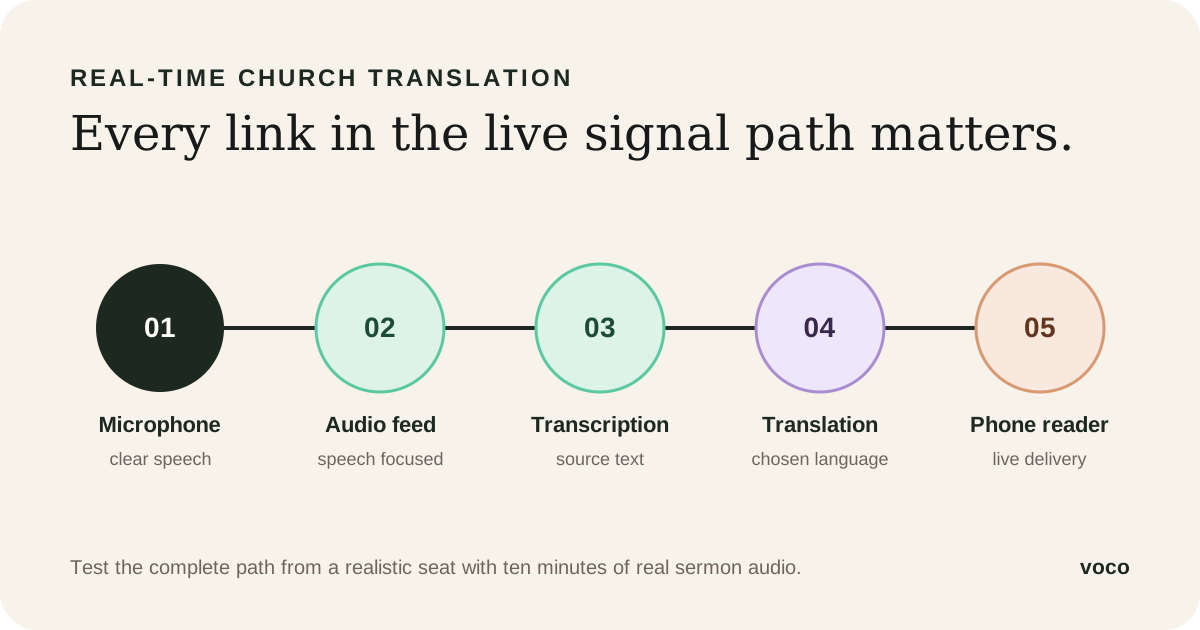
The live workflow has five links, and every link matters.
The speaker uses the church microphone. A speech-focused feed reaches the Voco dashboard. The system transcribes that source language, translates each active output language, and pushes short segments to connected browser readers. The attendee scans once, selects a language, and follows the service on their own device.
When translation feels poor, teams often blame the final model. The problem may be earlier in the chain. Check for a distant microphone, sound-desk clipping, music under the speech, weak upload speed, or congested guest Wi-Fi.
Speaker microphone — close, clear, and consistently used.
Audio feed — speech-focused, without avoidable room echo or music.
Church connection — stable upload from the operator device.
Translation session — correct source language and glossary terms.
Attendee reader — reachable QR code, usable WiFi or mobile data, and readable settings.
Delivery time
Measure whether people can follow comfortably, not whether a stopwatch shows zero delay.
Delivery varies with speech segmentation, audio clarity, network conditions, language pair, and speaking pattern. Long pauses, rapid speech, code-switching, and overlapping voices can change how segments arrive. Publishing one universal latency number would hide those differences.
Run ten continuous minutes and put the reader phone beside the operator. A fluent listener should be able to follow the sermon thread without repeatedly looking backwards or waiting through unexplained gaps. That pastoral test is more meaningful than optimising a single short phrase.
Audio
A direct speech feed is the most dependable upgrade a church can make.
A laptop or phone microphone is useful for a first test, but it hears the room: loudspeakers, congregation noise, reverberation, and nearby conversations. A direct auxiliary output from the sound desk through a simple USB audio interface usually gives speech recognition a much cleaner source.
Ask the sound engineer for a feed that prioritises spoken microphones. Worship music does not need to be translated, and sending a full music mix can make words harder to recognise. Check that the signal is strong without clipping and that every person expected to speak actually reaches the translation feed.
Attendee access
A permanent QR code removes the Sunday equipment queue.
Voco's attendee reader opens in a modern phone browser and offers 200+ output languages. Each listener chooses independently, so one service can support several language groups without handing out separate receiver channels.
Display the QR code before the service, print a short link as a fallback, and teach the welcome team one sentence about it. Keep one or two church-owned devices for people who do not use smartphones or need help with a smaller screen. Browser access removes friction for many people, but good hospitality keeps an alternative.
Resilience
A calm fallback plan is part of a real-time system.
No live technology is failure-proof. The operator should know which microphone is selected, how to confirm that segments are arriving, and what to do if the audio cable, browser, or network disconnects. A short printed checklist is more useful during a service than a long technical manual.
Keep the permanent reader URL and QR code unchanged, test a fallback microphone, and have the AV team name the person who decides whether to restart. For high-stakes services, retain a human interpreter or prepared translated material rather than making one live system the only route to essential information.
Second phone open in a priority language.
Fallback microphone selected and tested before people arrive.
Short link printed beneath the QR code.
Named volunteer who can restart or switch the audio input.
Rehearsal
Test the attendee journey from the back row, not only the dashboard.
During the 7-day trial, ask someone unfamiliar with Voco to test the full journey. They should enter the room, find the invitation, scan it from a realistic seat, choose a language, enlarge the text, and follow a recorded sermon. Then repeat the test with live speech and the actual Sunday audio route.
Include iPhone and Android, a weak WiFi location, a right-to-left language if relevant, Scripture references, spontaneous prayer, and the preacher's normal pace. Ask what the listener understood and where they lost the thread. Do not judge the rehearsal only by whether green indicators appeared on the operator screen.
Choosing the method
Real-time software is one route, not the automatic answer for every church.
A human interpreter is usually stronger for dialogue, nuance, sensitive ministry, and one stable language where a trusted person wants to serve. Receiver systems can be appropriate where phones are discouraged or the church already has interpreters and managed hardware. Browser-based software is strongest when language needs change, several languages may be needed, and the team wants a repeatable weekly process.
Many churches combine them: live text for the sermon, a shared display for captions, and bilingual leaders for prayer and conversation. The best system is the one that increases participation without creating a Sunday workflow volunteers cannot sustain.
Related pages
FAQ
What does real-time church translation actually mean?
It means attendees receive translated segments while the sermon is being delivered rather than waiting for a recording or summary afterwards. Speech still has to be segmented, transcribed, translated, and delivered, so the useful test is whether a fluent listener can follow the live thread comfortably.
Can real-time church translation work on phones?
Yes. Voco uses a browser reader opened from a permanent church QR code. Each attendee chooses their own language without installing an app or creating an attendee account.
What affects live translation delivery time?
Speech segmentation, microphone clarity, room noise, network conditions, speaking pace, code-switching, and the selected language pair can all affect how translated segments arrive. Test with the real Sunday audio route rather than relying on one universal latency claim.
Do we need a booth or receivers for real-time translation?
Not for Voco's browser workflow. A clear microphone or sound-desk feed, an operator device, internet access, and the attendee QR code are enough. Receiver hardware may still suit churches that need phone-free spoken interpretation.
What happens if the connection fails?
The operator should monitor a second phone, know the selected audio input, and rehearse a fallback microphone or reconnection. High-stakes services should also keep prepared translated material or a human route rather than relying on one live system alone.
How long should we rehearse before using it live?
Use at least ten continuous minutes of real sermon material, followed by one full live rehearsal. Ask a fluent listener to review meaning, reading pace, Scripture references, names, and any point where they lost the thread.
Ready this Sunday
Bring real-time church translation into the room this Sunday.
Use the audio you already have, show one QR code, and let guests follow the sermon live in their own language.