Anglican church guide
Anglican church translation for Common Worship and the sermon
An Anglican service contains both predictable liturgy and genuinely live speech. The strongest multilingual workflow prepares authorised texts in advance, translates the sermon and notices live, and stays simple enough for a small parish volunteer team.

By Josh Stannard, Founder of Voco
Building practical live translation for churches. Updated August 2026.
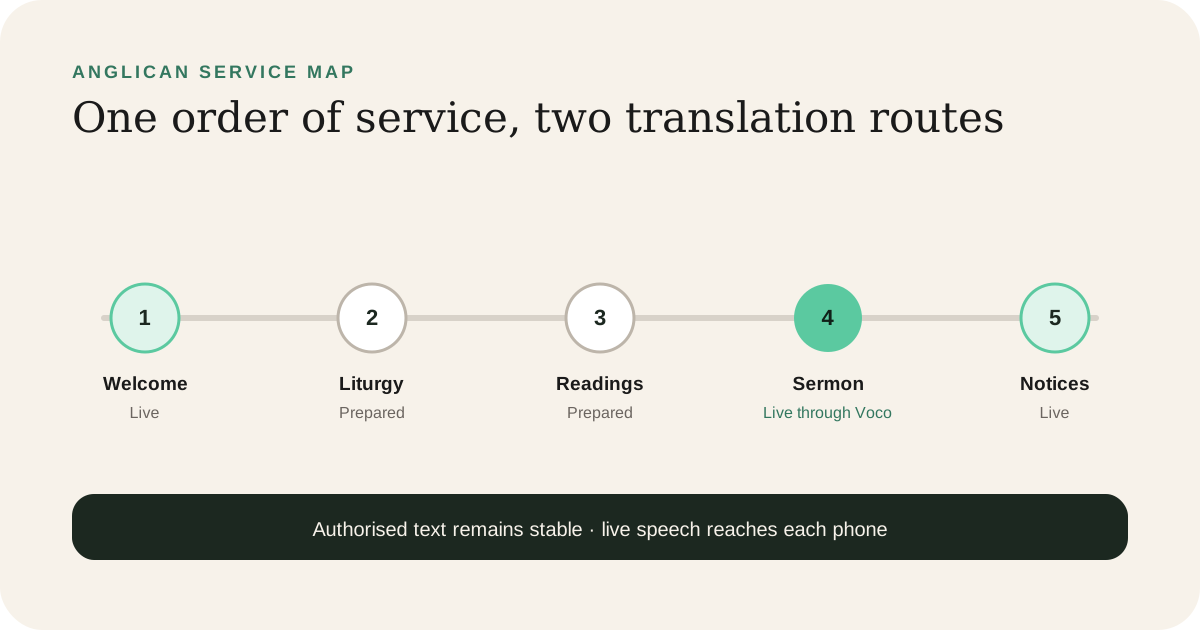
Map the service before choosing what to translate live
A Service of the Word, Holy Communion, Morning Prayer, Evensong, a baptism, and a civic service do not contain the same balance of fixed and spontaneous material. Ask the incumbent or worship planner for the order of service and mark each section as authorised text, appointed Scripture, prepared local text, live speech, or music.
Common Worship and the Book of Common Prayer are official liturgical resources of the Church of England, and the Church of England also publishes selected translations. Reuse those appropriate resources where available.
Do not silently replace authorised words with machine output merely because it is convenient.
Prepare readings and responses; translate the sermon live
Lectionary references are known before Sunday, so a multilingual order of service can point readers to a suitable Bible edition or include text where the parish has permission. The sermon, notices, and local explanations are different: their exact wording is not normally fixed in advance.
That is where live translation provides the most value. This hybrid also reduces distraction.
A listener is not waiting for an algorithm to re-create a familiar creed or response; they receive stable prepared words for corporate prayer and live text when the preacher begins speaking freely.
- Obtain the Sunday readings and authorised service choice early in the week
- Check the Church of England’s published translations before making a new version
- Treat sung settings and hymns as prepared content, not live speech-to-text
- Use Voco for the sermon, welcome, extempore prayer, and announcements
Make the workflow realistic for a parish volunteer
Many Anglican parishes do not have a dedicated broadcast engineer. The operator should need only to select the correct microphone, start the session, and glance at one test phone.
One QR code gives listeners access to 200+ output languages in their browser; no attendee account or app is required. Put the permanent link in the pew sheet as well as the projection, because visitors may arrive after the opening slide.
Document the setup on one side of paper and nominate a backup volunteer. If the process depends on the one person who invented it, it is not yet a parish system.
Handle church acoustics before blaming translation
A reverberant nave, an unamplified intercession leader, and a congregation speaking responses together are difficult inputs for any speech recogniser. Use the lectern, pulpit, president, and handheld microphones already routed through the sound desk.
Send a clean auxiliary output into a simple USB audio interface rather than relying on the laptop’s room microphone. During congregational responses, the prepared text remains the reliable source.
During the sermon, clear close-mic speech allows the live system to do its proper job. Test at the speaker’s ordinary pace with the heating, congregation, and sound system in their real positions.
Welcome people without turning them into a language project
Ask people which language and script they prefer for sustained teaching; do not infer it from nationality. Introduce translation as an ordinary parish provision alongside large print, step-free access, or a hearing loop, not as a special favour that draws attention to one family.
A small card can say that live sermon translation is available and that more languages can be selected after scanning. Then provide a named person who can explain Communion practice, children’s groups, safeguarding, and parish life.
The phone reader can make the words intelligible, but it cannot interpret Anglican customs or replace a human welcome.
A four-week Anglican parish pilot
Week one is a private recorded-sermon test. Week two adds a fluent reviewer and a glossary for clergy names, parish places, the church year, and recurring theological terms.
Week three rehearses the full Sunday journey from porch to pew. Week four runs quietly during an ordinary service and gathers feedback.
Voco’s 7-day no-card trial covers the technical evaluation; a parish that needs several weeks should budget for the Starter plan from £6/week rather than rushing a public decision. Record what the volunteer and listeners actually experienced, then take a recommendation to the PCC.
Frequently asked questions
Does Voco contain Common Worship in other languages?
Voco is a live translation service, not a licensed library of every authorised Anglican liturgy. Use translations published or approved by the appropriate Anglican authority for fixed texts, and use Voco for the sermon and other live speech.
Will it work for Evensong?
It can translate spoken introductions, readings, a sermon, and notices. Choral music and sung liturgy should be supplied as prepared text if needed; overlapping or sustained singing is not an appropriate promise for live speech translation.
Can a small parish run it without an AV team?
Yes, provided the audio path and volunteer workflow have been rehearsed. A laptop microphone is enough for a private test, but a clean feed from the existing sound desk gives a much more dependable weekly result.
Can we print one permanent QR code in the pew sheet?
Yes. Voco provides a permanent church link and QR route, so the parish can use the same access point rather than teaching visitors a new process each Sunday.
Does live translation replace a hearing loop?
No. Language translation, same-language captions, and hearing assistance solve different barriers. Keep the hearing loop or other assistive listening provision where it is needed.
Primary references
Official denominational resources used to verify the service-specific guidance on this page.