2026-09-26 · 4 min read
Simultaneous Interpretation Cost: Why Churches Pay 10x More Than They Need To
Conference-grade simultaneous interpretation runs into four figures per event, and churches keep getting quoted the same rates for a Sunday service.
By Josh Stannard, founder of Voco
A church hires a company to run interpretation for a weekend conference: 300 attendees, two languages, one day. The quote comes back at £1,400. Fair enough, that's what conference-grade simultaneous interpretation costs. The same church then asks the same company what it would cost to do this every Sunday, and gets told, essentially, the same rate, multiplied by 52. Nobody stops to ask whether a 90-person Sunday service actually needs conference-grade anything.
This is the confusion this article exists to clear up: what simultaneous interpretation genuinely costs at the level it's built for, why that pricing doesn't fit a weekly service, and what actually does. Prices checked August 2026.
Full disclosure: I built Voco, one of the tools mentioned as an alternative here.
What simultaneous interpretation costs at conference grade
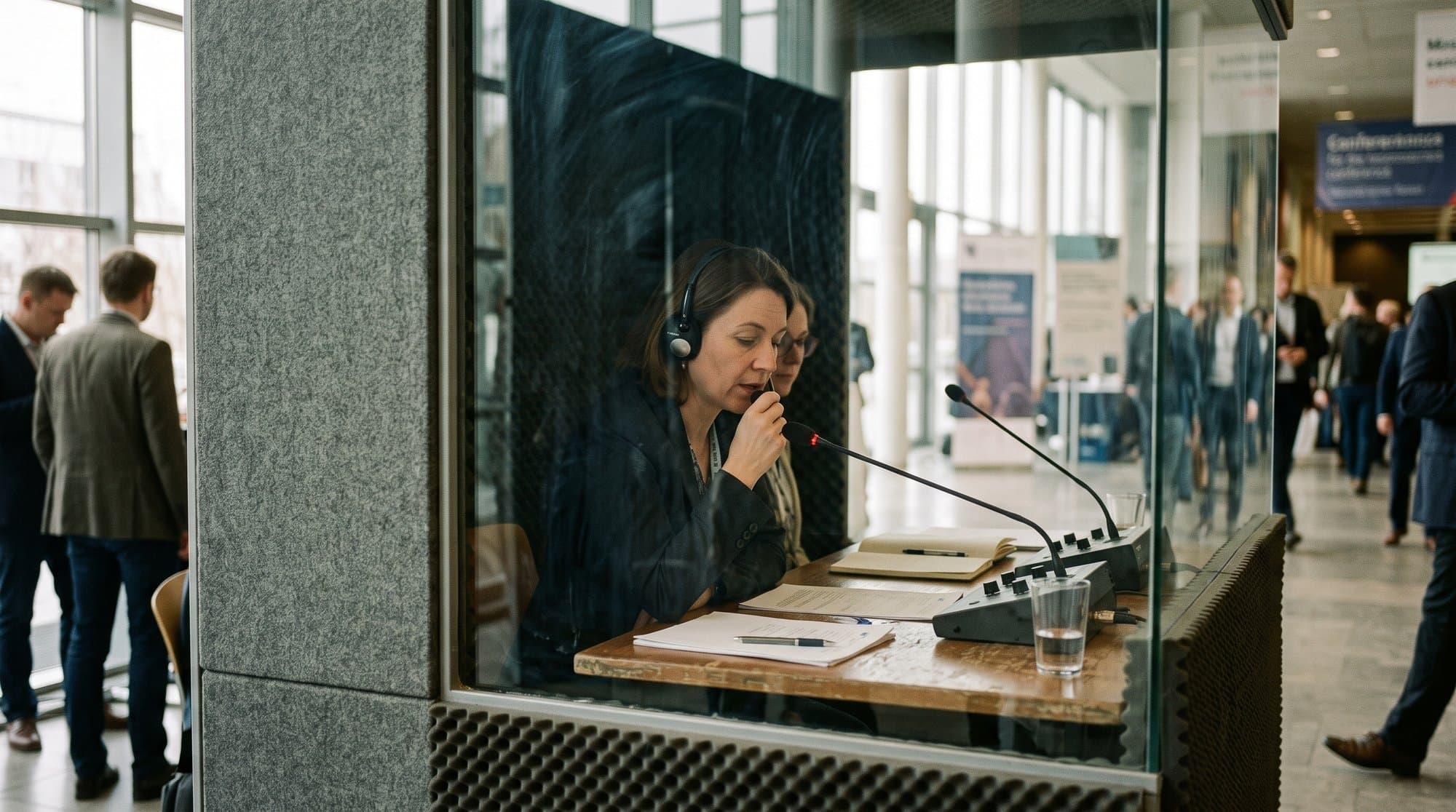
"Simultaneous interpretation" properly refers to a specific setup: one or more professional interpreters, working in real time (not pausing for the speaker), usually from a soundproofed booth, feeding translated audio to listeners through wireless receivers. It's the format used at the UN and at large international conferences, and the pricing reflects that.
Interpreters: Simultaneous interpreting is exhausting cognitive work. Anything over about 45 minutes requires two interpreters per language, working in relay (swapping every 20-30 minutes). UK day rates for professional interpreters run roughly £320 for a full day (up to 7 hours), £170 for a half day according to published agency rates, doubled for a second interpreter, doubled again per additional language.
Booths: A tabletop interpreting booth (the lightweight, cost-effective option) rents for roughly $150/day. A fully enclosed, soundproofed booth runs closer to $500/day. Larger equipment-rental firms quote whole-system packages starting around $400-$800/day for delegate microphones, technician support and multiple booths at conference scale.
Receivers and headsets: Budget $5-10 per receiver per day on top of the booth and interpreter cost, for however many listeners need one.
Add it up for a single-day, two-language, 300-person conference: two interpreters per language (four people), a booth, receivers for 300 people, and you're realistically in the £800-£1,500 range for the day, before travel and VAT. That's not a rip-off. That's genuinely what the equipment and the skilled labour cost at that scale.
Why those quotes don't fit a weekly service
The problem is that this pricing model assumes an event: booked once, priced once, run once. A weekly Sunday service isn't an event in that sense. It's the same job, 52 times a year, indefinitely. Multiply a single conference-day quote by 52 and you get a number in the tens of thousands of pounds a year, for a service that might have ninety people in the room and one or two languages that actually need covering.
Vendors selling into the conference market don't have a cheaper tier for "the same thing, but every week, forever, for a smaller room." Some will quote it anyway, at close to the same day-rate, because their pricing model doesn't have another gear. This is the "10x more than you need to" in this article's title: churches getting a conference-shaped quote for a job that was never conference-shaped to begin with.
The church-grade alternatives, priced
For a recurring weekly service, three options fit the actual job better:
- A single interpreter, no booth, speaking into a small FM transmitter, feeding wireless receivers. Hardware for a modest setup (10 receivers) runs $66-$180 one-off from suppliers like Retekess. Add the interpreter's ongoing cost on top, but you've dropped the booth, the second interpreter (for a shorter, single-language service), and the per-event rental markup entirely.
- An AI subscription tool, priced flat per week rather than per event. Voco runs £6/week (Starter) or £12/week (Church), plus VAT, with 200+ supported attendee languages. Starter allows 1-2 language groups per service; Church makes all supported languages available simultaneously, which a human-interpreter-and-booth setup simply can't match at any price for a small church's budget. Annualised that's £312-£624/year, against a conference-grade equivalent that would run into five figures.
- A hybrid: keep a volunteer or paid interpreter for your one or two main languages on the days it matters most, and use AI software as the always-on layer underneath for everyone else.
Special events: when to hire the pros anyway
None of this means simultaneous interpretation, done properly, is ever a bad idea. There are genuine moments where it's worth paying conference rates:
- A denominational conference or large multi-day event with delegates from many countries, where the scale genuinely matches what the pricing is built for.
- A wedding or funeral where the emotional and doctrinal weight of every word matters, and a human voice, not a synthesised one, is the right call regardless of cost. Voco has a resource specifically on special-events church translation that covers when to hire in properly.
- Legal or safeguarding-sensitive situations where precision and accountability matter more than budget.
For those, book a professional, pay the day rate, and don't try to solve it with a QR code. For the other 51 Sundays a year, that's not what you need, and paying for it anyway is the actual waste.
If your quotes have all come back priced for a conference you're not running, see what Voco actually costs for the job you do have: every Sunday, whatever languages show up.
Frequently asked questions
What should churches know about what simultaneous interpretation costs at conference grade?
"Simultaneous interpretation" properly refers to a specific setup: one or more professional interpreters, working in real time (not pausing for the speaker), usually from a soundproofed booth, feeding translated audio to listeners through wireless receivers. It's the format used at the UN and at large international conferences, and the pricing reflects that.
What should churches know about why those quotes don't fit a weekly service?
The problem is that this pricing model assumes an event: booked once, priced once, run once. A weekly Sunday service isn't an event in that sense. It's the same job, 52 times a year, indefinitely. Multiply a single conference-day quote by 52 and you get a number in the tens of thousands of pounds a year, for a service that might have ninety people in the room and one or two languages that actually need covering.
What should churches know about the church-grade alternatives, priced?
For a recurring weekly service, three options fit the actual job better:
What should churches know about special events: when to hire the pros anyway?
None of this means simultaneous interpretation, done properly, is ever a bad idea. There are genuine moments where it's worth paying conference rates:
First published on Medium.