2026-09-02 · 8 min read
How to Start an International Congregation Without Splitting Your Church
Growing immigrant attendance changes a church whether leaders plan for it or not, here's how to build an international congregation that stays one church, not two.
By Josh Stannard, founder of Voco
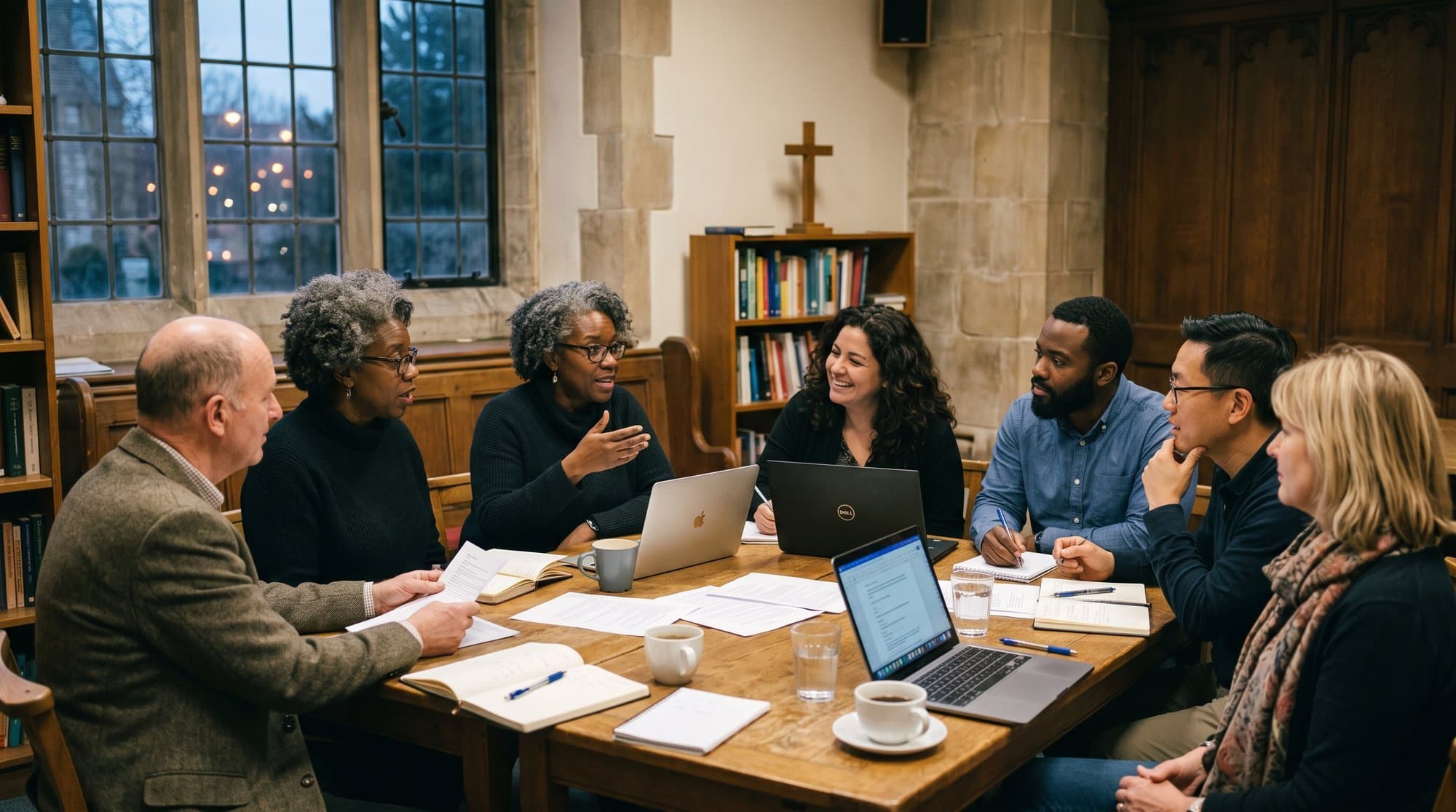
It usually starts small enough that nobody names it as a moment. A family from Eritrea starts coming most Sundays. Then their cousins. Then someone from the same city, unrelated but pointed there by word of mouth. Eighteen months later a pastor is standing at the back of the church counting how many languages are represented in the car park, and realising the church has quietly become something it wasn't built to be, and nobody decided that on purpose.
The UK has seen sustained international migration for over a decade: 10.0 million usual residents in England and Wales were born outside the UK at the last census, up from 7.5 million a decade earlier (Office for National Statistics, 2023). Churches in cities and larger towns are feeling that shift directly, often faster than their existing structures can adapt to.
This guide is for the moment after you've noticed it, practical wisdom on the models churches actually use, not a theological argument about whether you should. That question, in practice, tends to answer itself once the families are already in the building.
The moment churches face this
Three arrival patterns show up again and again, and each demands a slightly different response.
Sudden, concentrated arrival. A resettlement scheme, a local employer bringing in workers from one country, a specific crisis sending a wave of refugees to your area. Numbers arrive quickly, often speaking one dominant language, often with acute practical needs (housing, English classes, paperwork) alongside spiritual ones. This pattern demands fast, practical responses, a church that spends months deliberating on the "right" structural model while people are struggling to find housing has already missed the moment that mattered most.
Slow, steady accumulation. The pattern in the opening scene, no single triggering event, just a gradual build over years via word of mouth and existing community networks. By the time leaders notice, the shift is already well underway, and the practical challenge is less about urgency and more about catching up structurally to a reality that's already established itself informally.
A planted seed that grew. A church deliberately starts a small language-specific service or Bible study as an outreach effort, and it grows beyond what was originally planned for, forcing an unplanned decision about structure. This pattern is, in a sense, the easiest to plan for in advance, since the church chose to start it, but it's still common for leaders to under-plan the "what happens if this works" scenario, treating growth as a nice problem to solve later rather than something to structure for from the outset.
Each pattern changes the urgency, but not fundamentally the choice in front of you: how do you structure a church that now genuinely serves multiple language and culture groups, without either ignoring the newer group's needs or splitting into two churches that happen to share a building.
Three models
Model 1: church-within-a-church
A distinct congregation, often with its own language, its own service time, sometimes its own pastor or leader from within that community, operates under the same church's governance, budget, and building. Think of it as one church with two (or more) congregations inside it, deliberately connected rather than just co-located.
How it works well: the international congregation gets genuine autonomy to worship in a way that fits their culture and language, led by someone from within that community rather than always translated leadership from the host culture. Shared governance and budget keep the connection real rather than nominal.
Where it fails: if "shared governance" is nominal, the international congregation's leader sits on a committee but decisions are made elsewhere before they arrive, this model collapses into parallel services with an extra layer of paperwork. The structure only works if the international congregation's leadership genuinely shapes decisions, not just attends meetings about them.
A practical test: if the international congregation's leader could describe, specifically, a decision they changed the outcome of in the last six months, a budget line, a building use policy, a staffing choice, the shared governance is real. If they can only describe decisions they were informed about after the fact, it isn't yet, whatever the org chart says.
Model 2: integrated multilingual
Rather than separate congregations, the church runs as one body with multiple languages present throughout, services, leadership meetings, and social life.
How it works well: deepest form of unity on paper, everyone genuinely worships together, all the time. Works best when no single language group dominates so heavily that integration becomes assimilation in practice.
Where it fails: demands the most from leadership and infrastructure of the three models. Without solid translation provision (live captioning, trained interpreters, or both) the "integrated" service quietly becomes a service in the majority language that other groups tolerate rather than fully participate in.
A practical test: watch who's speaking from the platform over a typical month, not just who's present in the congregation. Integration that's real shows up in who leads worship, who preaches, who prays publicly, not only in who's counted in the attendance figures.
Model 3: plant-and-partner
Rather than building the international congregation inside the existing church structure, the host church helps plant a genuinely separate congregation, sometimes in the same building on a different day, sometimes elsewhere entirely, with a formal partnership (shared resources, joint events, mutual accountability) rather than shared governance.
How it works well: gives the new congregation full autonomy from day one, avoids the awkwardness of a minority group trying to influence decisions inside a structure built by and for someone else. Particularly suited to situations where the language and cultural gap is wide enough that shared services would serve neither group well.
Where it fails: "partnership" can drift into polite distance if not actively maintained, joint events happen once a year, mutual accountability becomes a formality, and the two churches end up no more connected than any two churches in the same denomination. This model needs the most deliberate maintenance of connection precisely because it has the least structural connection built in.
A practical test: if the sending church stopped actively reaching out tomorrow, would the partnership continue on its own momentum, or quietly stop? A partnership that depends entirely on one side's ongoing effort to initiate contact isn't yet a genuine two-way relationship, whatever the founding agreement says.
Leadership: raising leaders from the community itself
The single biggest predictor of whether any of these three models actually works long-term is whether leadership emerges from within the international community itself, rather than being permanently exercised on their behalf by the host culture's existing leaders.
This is slower and less comfortable than it sounds. It usually means identifying capable people early, investing real training and platform time in them even before they're fully "ready" by the host church's usual standards, and being willing to hand over decisions that used to sit with existing leadership. Churches that skip this step and rely indefinitely on translated leadership, a host-culture pastor whose sermons get interpreted, rather than a leader from within the community preaching directly, tend to plateau. The international congregation grows in attendance but never in ownership, and that gap eventually shows up as quiet disengagement rather than open conflict.
There's a specific trap worth naming: existing leaders sometimes wait for a candidate from the new community who matches the exact profile they'd look for in a host-culture leadership candidate, same theological training, same communication style, same comfort operating in existing structures. That standard, applied rigidly, screens out capable leaders who lead well within their own community but don't yet fit an imported mould. The fix isn't lowering standards; it's being honest about which parts of the "profile" are genuinely necessary and which are just familiar.
The unity question
Shared events, shared communion, shared budget, these are the places where the "one church" claim gets tested in practice, not just in mission statements.
Shared events. Occasional joint services (Easter, Christmas, a combined anniversary Sunday) matter less for their content than for what they signal: that the different congregations genuinely belong to each other, not just to the same building.
Shared communion. For churches where communion carries theological weight, whether it's celebrated together or separately says something real about unity, intentionally or not. This isn't a technical question, it's worth discussing explicitly with leaders from every congregation involved, rather than defaulting to whatever's administratively easiest.
Shared budget. Perhaps the sharpest test. A church-within-a-church model where the international congregation's ministry is consistently the smallest line item, decided by a budget committee they have no seat on, tells its own story regardless of what's said from the platform. Budget allocation is where good intentions either get backed with resources or quietly starve.
The translation infrastructure that makes integration possible
Whichever model you choose, something has to carry meaning across the language gap, sermons, announcements, pastoral conversations, leadership meetings. This is infrastructure, not an afterthought, and it needs the same seriousness as any other church system.
For leadership meetings and pastoral settings, the same principle from earlier applies with more force: don't let translation depend permanently on one bilingual volunteer. Build redundancy, whether that's more trained interpreters, live captioning tools as a backup, or both.
Voco's guide to starting an international congregation covers this infrastructure question in more depth, and the broader multilingual church guide is worth reading alongside it if you haven't settled on a service format yet. Some denominations have their own specific guidance worth checking too, see Voco's denomination-specific guides if yours has particular polity considerations that shape which of the three models above fits best.
Testify, don't argue
None of this is a debate to win. Churches that navigate this well tend to talk less about the theology of unity in the abstract and more about the practical, weekly decisions that either build it or erode it, who's in the room when the budget gets set, whose language leads the Christmas service, who gets asked to preach and who gets asked to translate.
Growing immigrant attendance isn't a problem a church solves once and moves past. It's an ongoing leadership choice, remade every budget cycle and every rota, about whether the church that's forming is genuinely one church or two churches sharing a car park. Choose the model that fits your specific arrival pattern and your existing leadership bench, build the translation infrastructure to support it properly, and revisit the choice honestly as the congregation keeps changing shape.
Frequently asked questions
What should churches know about the moment churches face this?
Three arrival patterns show up again and again, and each demands a slightly different response.
What should churches know about three models?
A distinct congregation, often with its own language, its own service time, sometimes its own pastor or leader from within that community, operates under the same church's governance, budget, and building. Think of it as one church with two (or more) congregations inside it, deliberately connected rather than just co-located.
What should churches know about leadership: raising leaders from the community itself?
The single biggest predictor of whether any of these three models actually works long-term is whether leadership emerges from within the international community itself, rather than being permanently exercised on their behalf by the host culture's existing leaders.
What should churches know about the unity question?
Shared events, shared communion, shared budget, these are the places where the "one church" claim gets tested in practice, not just in mission statements.
First published on Medium.